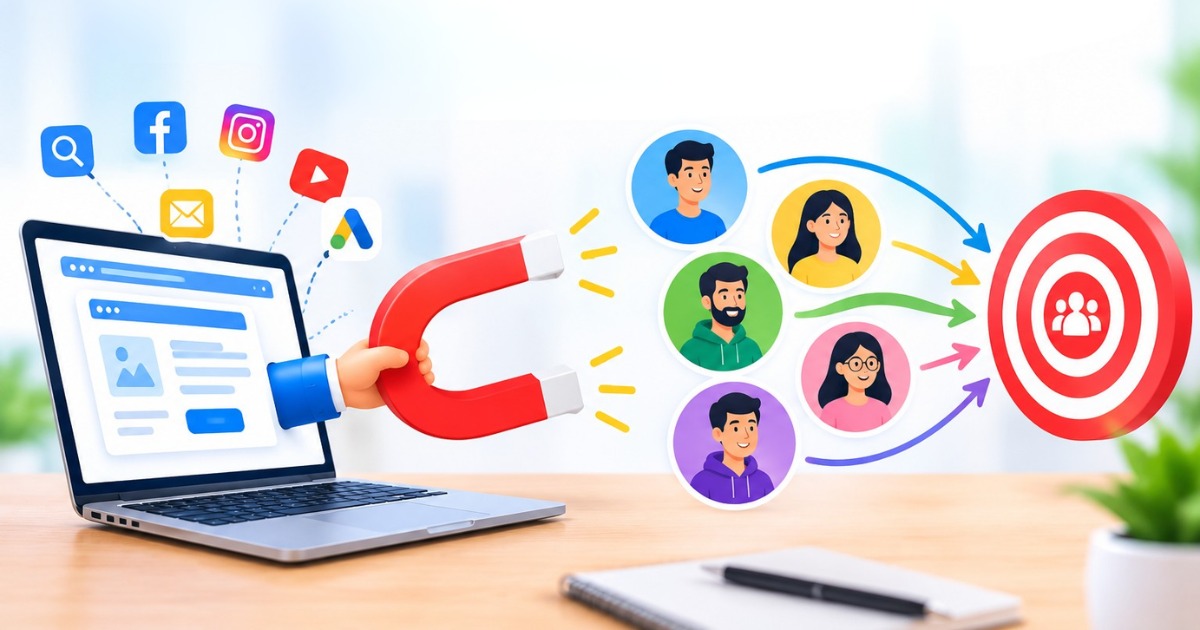
Online Strategy: How to Reach the Right Customers at the Right Time
In today’s digital marketplace, being visible online is no longer enough. Businesses need to reach the right customers at the right time with a message that matches their needs, interests and stage in the buying journey. A well-planned Online Strategy helps businesses achieve exactly that.
Customers now research products, compare services, read reviews and make purchasing decisions across multiple digital channels. They may discover a business through Google, interact with a social media post, read a blog, receive an email and eventually contact the company through its website. Businesses that understand this journey can create meaningful interactions instead of simply publishing content and hoping customers respond.
For New Zealand businesses, an effective Online Strategy can help attract local customers, generate leads, increase website traffic and build long-term relationships. Business.govt.nz recommends understanding who your customers are, what triggers their buying decisions and which online channels appeal to them before developing an online marketing plan.
What Is an Online Strategy?
An Online Strategy is a structured plan that uses digital channels and marketing activities to achieve specific business goals. It connects your website, search engine optimisation (SEO), paid advertising, social media, content, email marketing and analytics.
Rather than treating every digital channel separately, an effective strategy brings them together around the customer.
For example, imagine a customer searching Google for a service. They find your website through an organic search result, read an informative service page and then see your business again through a social media advertisement. After comparing several providers, they return to your website and submit an enquiry.
Each interaction forms part of the customer’s journey.
A successful Online Strategy makes these interactions consistent and useful. It also helps businesses understand which channels contribute to enquiries, sales and customer retention.
Why an Online Strategy Matters for New Zealand Businesses
New Zealand customers have access to a wide range of online information before making purchasing decisions. This makes digital visibility an important part of attracting and retaining customers.
Business.govt.nz states that an online presence can help businesses increase sales, showcase products and services, make it easier for customers to find them and stay in front of their audience.
However, simply having a website does not guarantee results.
Your business needs to answer important questions:
- Who are your ideal customers?
- What problems do they need to solve?
- What do they search for online?
- Which platforms do they use?
- What information do they need before contacting you?
- When are they most likely to make a purchase?
- What might stop them from choosing your business?
Your Online Strategy should address these questions before you invest heavily in advertising or content.
For further guidance, New Zealand businesses can use the resources available through Business.govt.nz.
Online Strategy Starts With Understanding Your Customers
You cannot reach the right customers if you do not understand them.
Start by identifying your ideal customer. Consider their location, needs, interests, buying behaviour and common problems. You can then divide your audience into meaningful customer segments.
For example, a service-based business might target:
- Homeowners looking for reliable local services
- Business owners seeking professional solutions
- Customers searching for urgent assistance
- Existing customers looking for additional services
- People researching a problem before making a purchase
Build Customer Personas
Customer personas help turn broad audiences into clear profiles.
A persona might include:
- Location
- Age range
- Occupation or business type
- Common challenges
- Buying motivations
- Preferred communication channels
- Search behaviour
- Typical objections
- Purchasing frequency
Business.govt.nz recommends using research, surveys, observations and existing data to understand customers and creating personas to represent different customer groups.
Once you understand your audience, you can create a more focused Online Strategy instead of trying to reach everyone.
Online Strategy Should Follow the Customer Journey
Customers rarely move directly from seeing a business to making a purchase.
Most journeys include several stages.
Awareness
At this stage, customers recognise a problem or need but may not know which business can help them.
Your goal should be to become visible and useful.
SEO content, social media posts, videos, educational blogs and targeted advertising can help introduce your business.
For example, a customer who searches for “how to improve website traffic” may not yet be looking for an SEO agency. An educational article can answer their question and introduce your expertise.
Consideration
Customers now know what they need and begin comparing their options.
Your website should provide clear information about your services, benefits, experience, pricing approach, reviews and frequently asked questions.
Case studies, testimonials, comparison content and detailed service pages can help customers make informed decisions.
Conversion
At the conversion stage, the customer is ready to take action.
Make the next step obvious.
Use clear calls to action such as:
- Request a quote
- Book a consultation
- Call today
- Get started
- Send an enquiry
- Shop online
Business.govt.nz recommends using clear calls to action so customers know what to do next rather than having to work it out themselves.
Retention
Your Online Strategy should not end when someone becomes a customer.
Follow-up emails, helpful content, social media communication, loyalty offers and personalised recommendations can encourage customers to return.
Building an ongoing relationship can turn one-time customers into repeat customers and advocates for your business.
Use SEO to Reach Customers When They Are Searching
Search engine optimisation remains an important part of an Online Strategy because it helps businesses appear when customers actively search for relevant products and services.
Instead of interrupting customers with an advertisement, SEO can help you appear when they already have a question, problem or purchasing intention.
Start by researching keywords your customers use.
For example, a New Zealand business might target phrases such as:
- Digital marketing agency NZ
- SEO services Auckland
- Website design Hamilton
- Google Ads management NZ
- Online marketing strategy NZ
Create useful pages around relevant search terms rather than forcing keywords into every paragraph.
Your website should also load quickly, work well on mobile devices, use clear navigation and provide useful information. Business.govt.nz recommends creating content around the words customers search for, regularly adding useful content and ensuring pages load quickly.
Online Strategy and Google Ads
SEO can take time to build, while Google Ads can help businesses reach people who are actively searching for specific products or services.
Google Ads allows businesses to target relevant searches and set budgets according to their marketing objectives. Business.govt.nz notes that search advertising can connect businesses with customers who are already searching for what they offer.
A strong Online Strategy can combine paid and organic search.
For example:
- Use Google Ads to generate immediate visibility.
- Analyse which search terms generate enquiries.
- Create SEO content around valuable searches.
- Improve landing pages based on customer behaviour.
- Track conversions and adjust campaigns.
This approach allows paid advertising and organic marketing to support each other.
Use Content to Answer Customer Questions
Content marketing can attract customers before they are ready to buy.
A useful blog can answer a question, explain a problem or help customers compare their options.
Good content ideas include:
- How-to guides
- Frequently asked questions
- Industry advice
- Service explanations
- Product comparisons
- Customer stories
- Local guides
- Troubleshooting articles
For a New Zealand audience, local relevance can make content more useful. Mentioning appropriate locations, local customer needs and New Zealand-specific considerations can help businesses connect with their target market.
Business.govt.nz recommends content that focuses on customer benefits, answers common questions and uses clear language.
Online Strategy Should Include Social Media
Social media allows businesses to communicate with customers in a more immediate and personal way.
However, posting frequently without a purpose does not create an effective strategy.
Instead, define what each platform should achieve.
Your social media content could:
- Build brand awareness
- Educate customers
- Showcase products or services
- Share customer reviews
- Answer common questions
- Promote special offers
- Drive website traffic
- Generate enquiries
You can also use paid social advertising to target audiences based on relevant characteristics and behaviours.
The key is to connect social media activity with the wider Online Strategy, rather than treating it as a separate marketing task.
Use Email Marketing at the Right Time
Email marketing works particularly well when customers have already shown interest in your business.
For example, someone may download a guide, request information, make a purchase or subscribe to your newsletter. You can then send relevant messages based on their relationship with your business.
Useful email campaigns can include:
- Welcome emails
- Educational content
- Product recommendations
- Special offers
- Service reminders
- Customer follow-ups
- New product announcements
New Zealand’s Business.govt.nz recommends having a clear purpose for email campaigns, identifying the audience, measuring results and giving recipients an appropriate way to opt out.
Businesses should also handle customer information responsibly. The New Zealand Office of the Privacy Commissioner provides guidance on using personal information for advertising and recommends being clear about how information will be used.
Personalise Your Online Strategy
Customers respond better when businesses provide information that matches their needs.
Personalisation does not always require complicated technology.
You can start by creating different messages for different customer groups.
For example:
New customer:
Introduce your business and explain how you solve their problem.
Interested prospect:
Provide useful information, reviews and reasons to choose your service.
Existing customer:
Offer relevant updates, support and additional services.
Past customer:
Send useful reminders or relevant offers that encourage them to return.
This approach helps your business deliver the right message instead of sending the same communication to everyone.
Measure Your Online Strategy
You cannot improve what you do not measure.
Your Online Strategy should include clear performance indicators.
Track metrics such as:
- Website traffic
- Organic search traffic
- Keyword rankings
- Enquiry numbers
- Conversion rate
- Cost per lead
- Advertising return
- Email open and click rates
- Social media engagement
- Repeat purchases
Analytics can show which pages customers visit, where they come from and what actions they take. Business.govt.nz recommends using web analytics to understand how customers use a website and to identify opportunities for improvement.
Do not focus only on traffic. A smaller number of relevant visitors can generate more business than thousands of people who have no interest in your products or services.
Online Strategy Requires Continuous Improvement
Digital marketing changes constantly. Customer behaviour, search trends, advertising platforms and competitors can all change.
That means your Online Strategy should not remain unchanged for years.
Review your performance regularly.
Ask:
- Which channels generate the best leads?
- Which content attracts the right audience?
- Which pages lose visitors?
- Which advertisements generate enquiries?
- Which keywords bring relevant traffic?
- Which customers return?
- Where can we improve the customer experience?
Use your findings to make informed changes.
Business.govt.nz recommends reviewing website performance, updating useful content, improving calls to action and using customer feedback and analytics to strengthen an online business.
Create an Online Strategy That Connects Every Channel
The most effective approach does not rely on one marketing channel.
Instead, connect your digital activities.
A potential customer might:
Search Google → Read your blog → Visit your service page → See a social media post → Return to your website → Submit an enquiry → Receive an email → Become a customer.
Every step should provide a consistent experience.
Your website should support your advertising. Your SEO should support your content. Your social media should support your brand. Your email marketing should support customer retention. Your analytics should connect the results.
That is how an Online Strategy becomes more than a collection of marketing activities.
Build Your Online Strategy With 29i Digital
Reaching the right customers at the right time requires planning, useful content, strong digital visibility and continuous optimisation.
At 29i Digital, businesses can access digital marketing solutions designed to strengthen their online presence and connect with their target audience.
From Online Strategy and SEO to Google Ads, Meta Ads, Email Marketing and Web Design, each digital activity can work together to support your broader business goals.
If you want to improve your digital presence and create a more focused approach to reaching customers, speak with the team at 29i Digital.
Call Now: 0800 290 029
A clear Online Strategy helps you move from simply being visible online to being visible to the people who matter — when they are most ready to engage with your business.