SEO vs Paid Advertising: Which One Delivers Better Results?
In today’s digital marketing world, businesses have many options for reaching customers online. Two of the most effective and widely used strategies are Search Engine Optimisation (SEO) and Paid Advertising. Both methods help businesses improve online visibility, attract traffic, and generate leads, but they work in very different ways.
Many business owners often ask the same question:
“Which delivers better results — SEO or Paid Advertising?”
The answer depends on your business goals, budget, timeline, competition, and marketing strategy. While some businesses prefer long-term organic growth through SEO, others rely on paid advertising for faster results and immediate visibility.
Understanding the strengths and differences between SEO and paid advertising can help businesses make smarter marketing decisions and improve overall online performance.
What Is SEO?
SEO (Search Engine Optimisation) is the process of improving a website’s visibility in organic search engine results.
The goal of SEO is to help websites rank higher on Google and other search engines when users search for relevant keywords.
SEO involves:
- Keyword optimisation
- Website improvements
- Technical SEO
- Content creation
- Link building
- Mobile optimisation
- User experience improvements
Unlike paid advertising, SEO focuses on earning traffic naturally rather than paying for clicks.
👉 Learn more about SEO: https://29i.co.nz/search-engine-optimization/
What Is Paid Advertising?
Paid advertising refers to online ads businesses pay for to appear on search engines, social media platforms, and websites.
Popular paid advertising platforms include:
- Google Ads
- Facebook Ads
- Instagram Ads
- YouTube Ads
- LinkedIn Ads
Businesses pay to display advertisements to targeted audiences based on:
- Keywords
- Interests
- Demographics
- Behaviour
- Location
Paid advertising is often referred to as Pay-Per-Click (PPC) marketing because businesses usually pay when users click on their ads.
👉 Learn more about Google Ads: https://29i.co.nz/google-ads/
Why Businesses Use SEO and Paid Advertising
Both SEO and paid advertising help businesses:
- Increase visibility online
- Drive website traffic
- Generate leads
- Improve brand awareness
- Increase sales
- Reach target audiences
However, the methods, costs, timelines, and long-term benefits differ significantly.
Benefits of SEO
1. Long-Term Organic Traffic
One of the biggest advantages of SEO is sustainable long-term traffic.
Once a website ranks well on Google, it can continue attracting visitors without paying for every click.
Strong SEO can help businesses:
- Generate ongoing traffic
- Reduce long-term advertising costs
- Build stable online visibility
Unlike paid ads, SEO results can continue even when active marketing campaigns slow down.
2. Builds Trust and Credibility
Users often trust organic search results more than paid advertisements.
Websites ranking naturally on Google are generally seen as:
- More trustworthy
- More authoritative
- More reliable
Good SEO improves:
- Website quality
- User experience
- Content relevance
- Site performance
These factors help businesses build stronger customer trust over time.
👉 Learn about Google ranking factors: https://searchengineland.com/guide/what-is-seo
3. Better Return on Investment Over Time
SEO requires time and consistent effort, but long-term results can provide excellent return on investment (ROI).
Once rankings improve, businesses can continue receiving traffic without paying for every website visit.
This makes SEO highly cost-effective for:
- Long-term business growth
- Brand authority
- Ongoing lead generation
4. Improves Website Quality
SEO encourages businesses to improve:
- Website speed
- Mobile responsiveness
- Navigation
- Content quality
- User experience
These improvements not only help search rankings but also increase customer satisfaction and conversions.
👉 Learn more about website user experience: https://www.nngroup.com/articles/definition-user-experience/
5. Supports Brand Awareness
Ranking consistently on Google helps businesses stay visible to customers regularly.
Strong organic visibility improves:
- Brand recognition
- Customer confidence
- Online authority
Businesses appearing frequently in search results are more likely to attract clicks and customer trust.
Benefits of Paid Advertising
1. Immediate Results
One of the biggest advantages of paid advertising is speed.
Google Ads and social media ads can place businesses at the top of search results almost instantly.
This is ideal for businesses wanting:
- Quick traffic
- Immediate leads
- Fast visibility
- Product launches
- Seasonal promotions
Paid advertising works much faster than SEO.
2. Highly Targeted Advertising
Paid advertising platforms allow businesses to target very specific audiences based on:
- Age
- Gender
- Location
- Interests
- Search intent
- Online behaviour
This helps businesses reach people most likely to convert into customers.
For example:
- Local businesses can target nearby customers
- Online stores can target shoppers
- Service providers can target specific industries
Advanced targeting improves advertising efficiency and conversion rates.
3. Flexible Budget Control
Paid advertising allows businesses to:
- Set daily budgets
- Pause campaigns anytime
- Increase or reduce spending
- Test different ad strategies
This flexibility makes paid advertising suitable for businesses with different budget sizes.
Small businesses can start with modest budgets and scale campaigns gradually.
4. Faster Lead Generation
Paid ads are highly effective for generating immediate enquiries and conversions.
Businesses can quickly:
- Increase website traffic
- Generate phone calls
- Collect enquiries
- Promote special offers
For businesses needing fast results, paid advertising is often the preferred strategy.
5. Detailed Analytics and Tracking
Paid advertising platforms provide detailed campaign insights including:
- Clicks
- Impressions
- Conversions
- Cost-per-click
- Return on investment
This allows businesses to measure performance accurately and optimise campaigns for better results.
👉 Explore Google Analytics: https://analytics.google.com/
SEO vs Paid Advertising: Key Differences
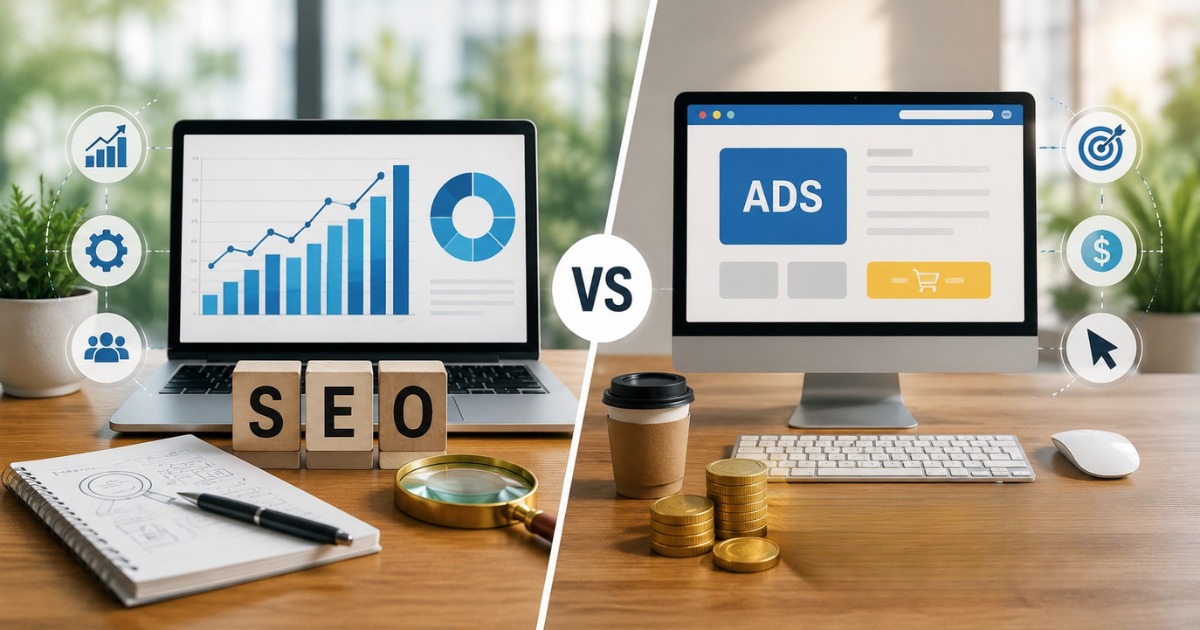
| Feature | SEO | Paid Advertising |
| Cost | Long-term investment | Pay-per-click |
| Results Speed | Slower | Immediate |
| Traffic Duration | Long-lasting | Stops when ads stop |
| Credibility | Higher trust | Paid visibility |
| Targeting | Keyword-focused | Advanced audience targeting |
| ROI | Better long-term | Faster short-term |
Which Strategy Delivers Better Results?
The answer depends on your business goals.
SEO Works Best For:
- Long-term growth
- Sustainable traffic
- Building authority
- Improving credibility
- Cost-effective long-term marketing
SEO is ideal for businesses focused on long-term digital growth.
Paid Advertising Works Best For:
- Immediate traffic
- Quick lead generation
- Promotions
- Product launches
- Fast visibility
Paid advertising is ideal for businesses needing rapid results.
Why Combining SEO and Paid Advertising Works Best
Many successful businesses combine SEO and paid advertising to maximise online growth.
Using both strategies together helps businesses:
- Achieve immediate visibility
- Build long-term traffic
- Improve brand awareness
- Generate faster leads
- Increase conversions
For example:
- Paid advertising can generate immediate traffic while SEO builds long-term rankings.
- SEO improves website quality, helping paid ads convert better.
- Businesses can dominate both paid and organic search results simultaneously.
This combined strategy often delivers the strongest digital marketing performance.
👉 Learn about integrated digital marketing: https://blog.hubspot.com/marketing/digital-marketing
Common Mistakes Businesses Make
Relying Only on Paid Ads
Businesses depending entirely on paid advertising may struggle when advertising budgets stop.
Ignoring SEO
Without SEO, businesses miss long-term organic traffic opportunities.
Poor Website Experience
Even strong marketing campaigns fail if websites are slow, outdated, or difficult to use.
Weak Targeting
Poor audience targeting reduces conversion rates and increases marketing costs.
How Professional Digital Marketing Helps
Professional digital marketing services help businesses:
- Develop the right strategy
- Improve campaign performance
- Increase conversions
- Reduce advertising waste
- Improve search visibility
- Track measurable results
Experienced professionals understand how to balance SEO and paid advertising for maximum business growth.
How 29i Digital Helps Businesses Grow Online
29i Digital provides professional digital marketing solutions designed to improve business visibility, traffic, and sales.
Services include:
- SEO services
- Google Ads management
- Meta Ads campaigns
- Website design
- Online strategy
- Content marketing
- Analytics and reporting
The goal is to help businesses achieve both short-term and long-term online success.
Whether you need immediate leads through paid advertising or sustainable growth through SEO, 29i Digital creates customised strategies tailored to your business goals.
Final Thoughts
Both SEO and paid advertising offer valuable advantages for businesses wanting to grow online.
SEO provides long-term visibility, trust, and sustainable traffic, while paid advertising delivers immediate results, targeted reach, and faster lead generation.
Rather than choosing one over the other, many businesses achieve the best results by combining both strategies into a complete digital marketing plan.
The right approach depends on your goals, industry, competition, and marketing budget.
If you want to improve your online visibility, attract more customers, and grow your business effectively, investing in both SEO and paid advertising can deliver powerful results.
📞 Contact: 0800 290 029